The Bell Beneath Weißenhütten
An Unearthly Tolling from a Lost Village of East Prussia
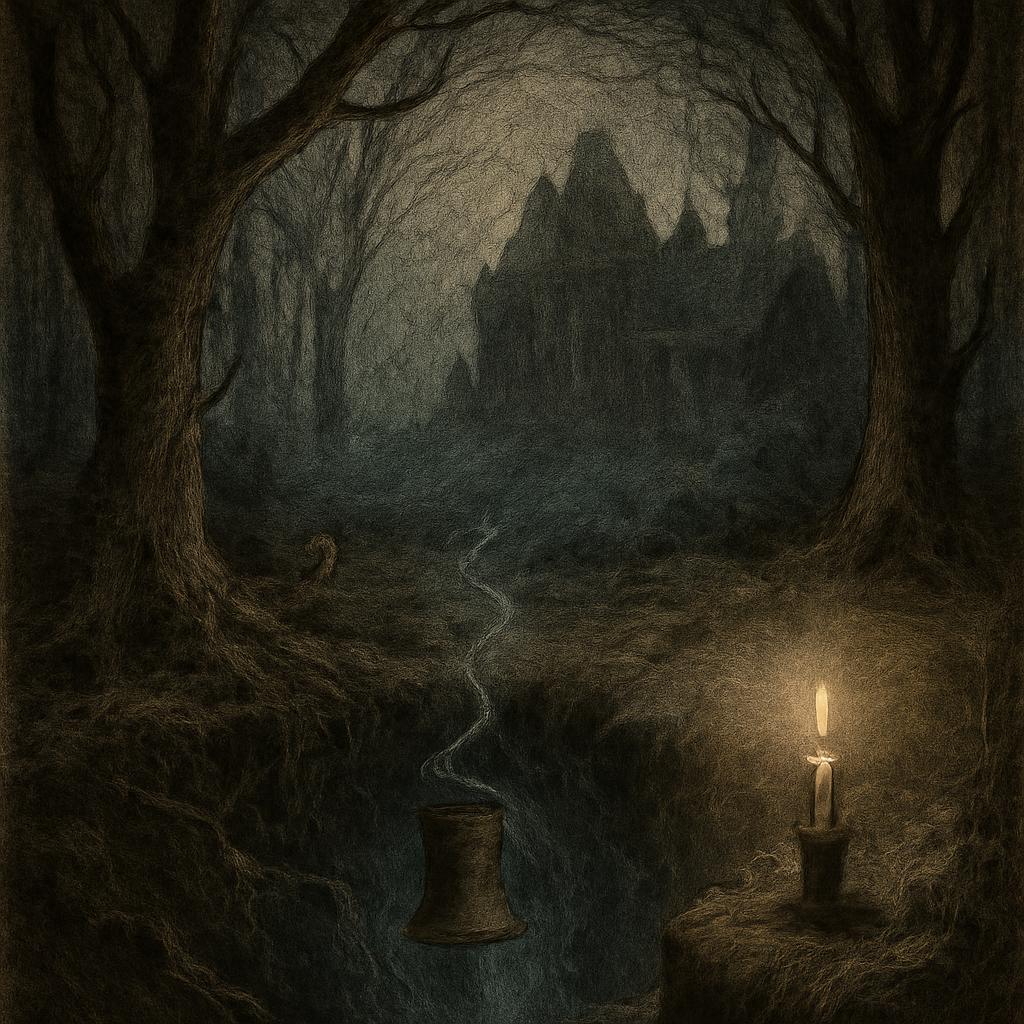
In the dense, whispering woodlands far from any charted road or known township lies the vanished village of Weißenhütten, a place notoriously absent from all maps and registers. To the uninitiated, it is as though it never was; yet to those who have stumbled upon its fading traces, Weißenhütten is a locus of the uncanny — a site where the border between the living world and the subterranean unknown grows inexplicably thin.
Weißenhütten, said to have flourished during the late 18th century and to have vanished in the early 19th, remains shrouded in an unsettling mystery. Local lore—passed down in hushed tones by elder villagers of surrounding settlements—speaks of a bell, buried deep beneath the earth, that tolls without any mortal hand to strike it. This is no ordinary peal but an eerie, resonant knell that pierces night’s blackest hours and seems to emanate from the very bowels of the forest itself.
Origins of the Bell
There is scant written record of Weißenhütten’s existence, save for a handful of dilapidated parish archives and a solitary diary belonging to one Johann Albrecht, a clergyman who once served the village’s small chapel. The diary recounts whispered tales of a strange bell in the chapel’s crypt, said to have been cast not by mortal smith but by unknown hands under the witching moon, with metal imbued by the very soil and shadows of the surrounding woods.
According to Albrecht, the villagers believed the bell was a conduit to the underworld, rung by spirits intent on crossing into the living realm. On certain nights, when the wind moaned mournfully through the skeletal trees, the bell would toll from below, an unearthly peal that stirred dread in the hearts of even the bravest men.
The Lost Village and Its Vanishing
Weißenhütten disappeared without formal explanation. Some hypothesise an epidemic, others blame a sudden conflagration or mass exodus. Yet the peculiar nature of its erasure points to something beyond mere natural calamity. When explorers in the late 19th century sought to rediscover the village, there was no trace of habitation, no crumbling ruins or charred timbers—only an oppressive silence whose weight seemed to pull downward, as though the land itself conspired to conceal the past.
Occasionally, passersby through the forest claim to hear a distant, subterranean knell just before dusk, a sound impossible to attribute to any natural cause. The bell beneath Weißenhütten tolls still, but to what end remains a matter of grisly speculation.
Accounts of the Underground Tolling
- The Timbercutter’s Tale: A rugged woodsman once paused within the forest clearing near where Weißenhütten is said to have stood. He describes hearing a low, sonorous ringing reverberating from beneath his feet, as though a vast bell were submerged beneath layers of earth and moss. The sound was steady, rhythmic, and profoundly sorrowful, evoking a deep sense of melancholia and dread.
- The Scholar’s Investigation: A historian, equipped with early scientific instruments, journeyed to the region in the 1870s, drawn by the legend. Though he found no physical sign of the bell or village, his recordings captured inexplicable vibrations in the soil coinciding with nocturnal bell-like sounds. Never published, his notes speak of an audible phenomenon defying contemporary understanding.
- Local Superstition: Villagers from neighbouring hamlets avoid the site after sunset, believing that to hear the bell is to invite the spirits’ attention, risking madness or disappearance. One whispered warning persists that the bell tolls to summon lost souls, never to return.
Contemplations on the Nature of the Bell
The existence of a bell that tolls from beneath the earth in a village erased from memory invites considerations both spectral and metaphysical. Is the bell a relic of a supernatural pact, a liminal artefact binding the living to the dead? Or might it be the echo of some long-forgotten tragedy, its mournful sound bound eternally to the soil, inaccessible yet ceaseless?
In the spectral gloom of East Prussian legend, the bell beneath Weißenhütten rings somewhat as a dirge or an omen—a sombre herald of places and histories erased by time’s relentless passage but never wholly silenced. Those who hear it are reminded that some curiosities reside not simply in forgotten villages or lost objects, but in the very layering of place and story, and the haunted spaces where such layers quietly stir.