The Drowned Bell of Zum Trunkenen Maus
An Official Memorandum on the Persistent Ringing Heard Beneath a Flooded Cellar in the Village of Großwardein, 1912
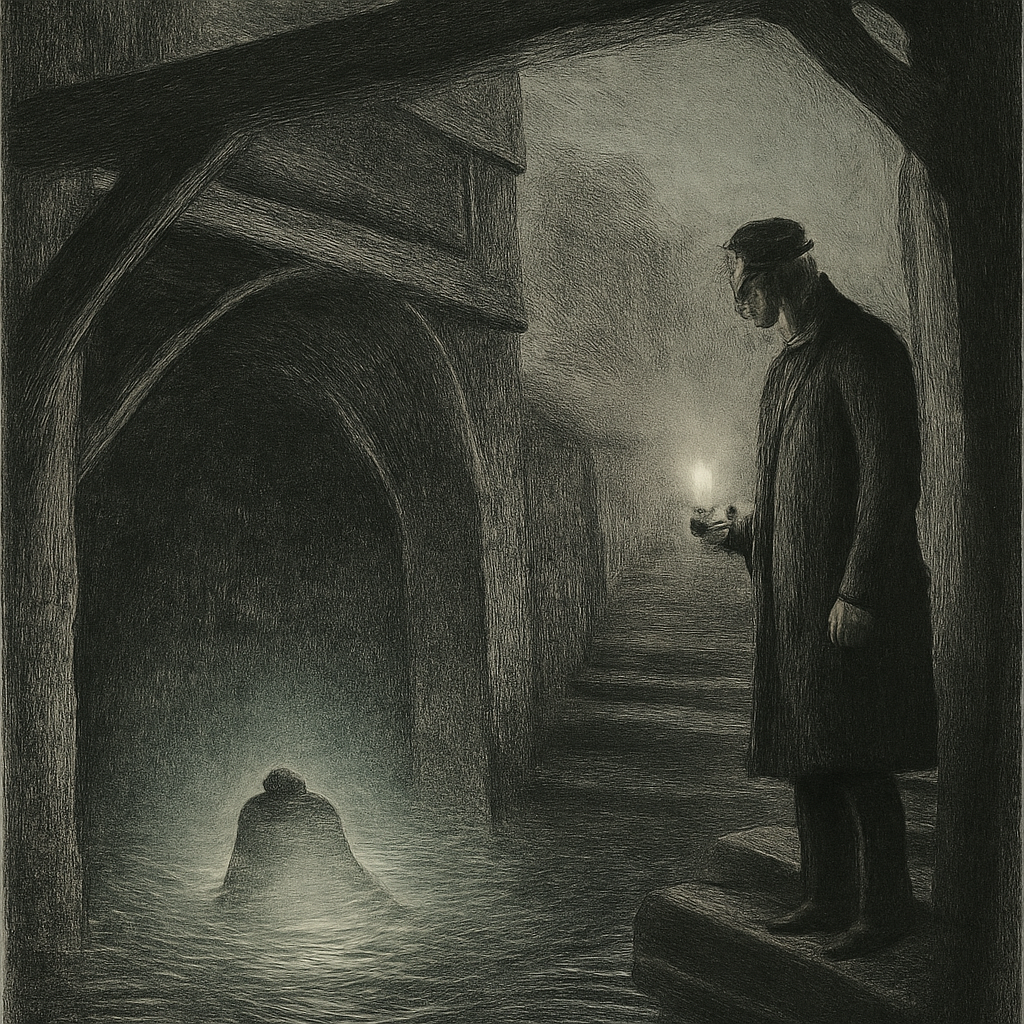
Official Memorandum: On the Haunted Bell Beneath the Inn “Zum Trunkenen Maus”
To all authorities concerned with matters of the supernatural and unexplained phenomena in the district of East Prussia, the following account is submitted for consideration under strict confidentiality. The undersigned, Herr Friedrich Quetzlinberger, local magistrate and occasional chronicler of arcane occurrences, presents herein a detailed report of an unusual supernatural curiosity emanating from a flooded cellar beneath the ancient inn known as Zum Trunkenen Maus, situated near the banks of the Wispel River.
Chronology and Context: The year is 1912. The region has been subjected to a persistent and unrelenting rain, rendering the valley sodden and the streets sodden with murk. This bleak and atmospheric weather seems to lend itself to the proliferation of such uncanny phenomena, which have been whispered about amongst villagers, but have now come to official attention due to their peculiarity and the repeated interventions required by local constabulary.
On the evening of October the 13th, the first reports were received concerning an inexplicable bell ringing, not upon the surface of the earth, but beneath it, in the submerged bowels of the inn’s cellar, which is known to be inundated by subterranean springs that have risen unnervingly in recent months.
Description of the Phenomenon
The bell, it is noted, is not visible above the waterline and indeed appears to be wholly immersed. Yet, despite being underwater, the bell’s toll rings out clearly and eerily through the contact dampness, its reverberations carrying in a manner contradictory to natural acoustics. The tolling possesses a cadence slow and measured, like the heartbeat of the earth itself, and is accompanied by a faint phosphorescent glow beneath the surface, illuminating the cellar’s flooded beams and walls with a ghostly pallor.
Those who have ventured to investigate, notably Herr Quetzlinberger himself accompanied by two local monks versed in exorcism rites, report a dreamlike quality to the experience. As the bell tolls, time seems to slow and the boundary between waking and dreaming grows thin, yielding sensations akin to half-remembered visions of lost souls or drowned phantasms moaning in a liminal space.
The Bell’s Origins and Theories
- Historical records from the 18th century suggest the bell may have been part of an old chapel bell tower once sundered in floods and later submerged during renovations of the inn.
- Local superstition holds that the bell tolls not for the living, but as an omen heralding the arrival of the Nachtmahr, a spirit said to prey upon those unfortunate enough to hear its call in the dark hours.
- Some scholars postulate the bell as a rift between the realm of the dead and the living, its sound a desperate plea or curse trapped beneath the waters.
Witness Statement: Herr Quetzlinberger
"As I descended the crooked stairs into the cellar’s gloom, the rain tapping like skeletal fingers upon the earth above, I found myself enveloped by the spectral chime. Each toll was a languid sigh, immutable and unfathomable, stirring memories not of my own. The water was cold and unyielding, and in its depths shimmered the inborn dread of forgotten things. It is as if the bell itself marks a rupture in our world—a door left ajar to realms best left undisturbed."
Conclusion and Recommendations
Given the unceasing nature of the phenomenon and its seeming resistance to natural explanation or intervention, it is advised that the cellar beneath Zum Trunkenen Maus remain sealed until further inquiry by specialists in arcane matters. Investigations should endeavour to balance the preservation of local heritage against the risk of exacerbating this otherworldly disturbance.
This memorandum is submitted for dissemination within appropriate circles, and all measures taken henceforth shall be kept under strict surveillance to prevent public alarm whilst allowing scholarly examination.
Respectfully,
Herr Friedrich Quetzlinberger
Magistrate and Custodian of Esoteric Records
Großwardein, November 1912