Encrypted Benedictions in the Vertical Ruin
A sysadmin’s log from a rain-blurred night atop the railway relic, 2049
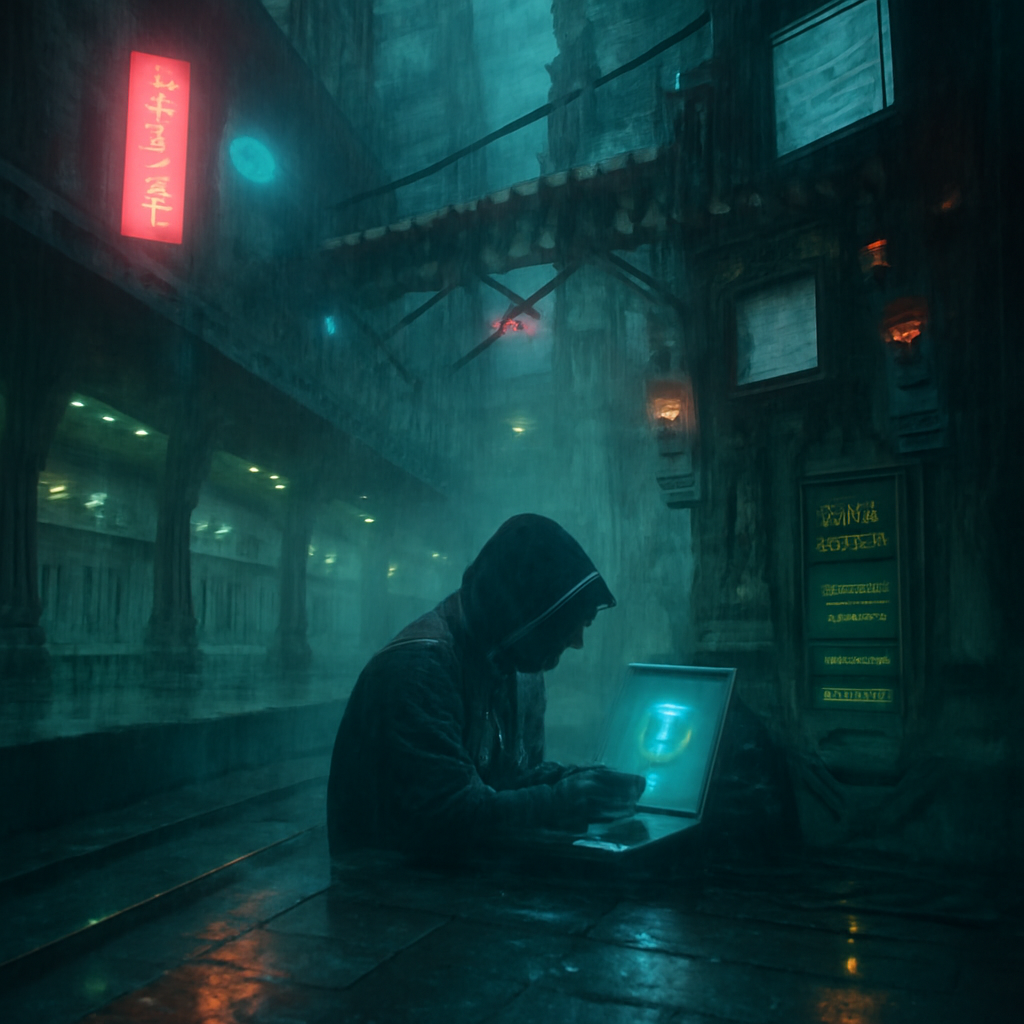
Surveillance Transcript: Night Shift Log 0415–0512 Hours
Location: Old Central Rail Terminal Vertical Slum, Sector 7G
Date: 20 June 2049
Reporter: Sysadmin Elias Trenn
Weather Conditions: Persistent acid rain, ambient air toxic index elevated
Equipment Status: Surveillance feeds stable; intermittent signal distortions; three legacy server nodes active
0415 hours. The acid rain hammers down relentlessly, streaking neon glows from derelict megasigns into puddles over cracked platforms. The vertical slum, cobbled around the defunct Central Rail Terminal, groans under decades of neglect. Decrepit metal scaffolding entwines with tangled power conduit, as if the station’s skeletal remains — rusting and listless — still struggle to hold verticality against gravity and time. Shadows flicker beneath the humming strata of surveillance drones circling overhead. My fingers hesitate on the console keys: the backlog of forgotten packets, encrypted messages, and silent digital prayers demand decoding.
0423 hours. An anomalous data burst triggers an alert — the encrypted prayer app, "Code: Salat," surfaces again. The app, banned five years prior following a corporate directive citing “spiritual misinformation” and potential anti-corporate mobilising, persists here as a ghost in the machine. Official records deny its existence; the sprawling corp-net wipes traceable data clean. Yet in Sector 7G, away from prying eyes, it glides through firewall cracks like a whispered hope.
0437 hours. I isolate a prayer packet encrypted with a cipher once thought dead. User ID masked beneath rotating pseudonyms. The interface echoes vintage spirituality twisted by quantum obfuscation — psalms and mantras folded into holographic glyphs and synesthetic pulses, layered like urban graffiti beneath acid-soaked rain. One message extracted reads:
- "May the digital rain wash past our wires, cleansing the static that haunts these ruins."
- "For every lost byte, a soul kept safe beneath neon flicker."
0455 hours. Outside the surveillance camera’s fixed angle, the slum’s denizens move like shadows stitched to the station’s ribs. They cling to obsolete machinery resurrected as homes: patched CRT panels flickering with forgotten broadcasts, rusted control hubs humming faintly with illicit power taps. Where corporate security tapes document only silence, I hear the pulse of whispered defiance. A child’s laughter, transfigured through a broken comm-link, escapes into the acid storm. I wonder if salvation itself has been rewritten — encrypted — into these ritual packets, a last refuge from overhead eyes.
0504 hours. The app’s prayer logs reveal patterns inconsistent with prayer alone. Embedded metadata suggests coded coordinates, temporal markers, perhaps clandestine meetings or data drops. The slum’s verticality conceals layers beyond the eye: forgotten maintenance shafts and collapsed platforms now repurposed for shadow exchanges. Surveillance layers struggle to interpret these encrypted rituals, filtered through corp net algorithms designed to erase, rewrite, and forget.
0512 hours. Signal distortions increase. Acid rain corrodes exterior sensors, and a local server node flickers towards shutdown. As the sysadmin, the weight of remaining a silent sentinel among decaying infrastructure settles heavily — a witness to secrets too fragile for the daylight, hovering on the cusp of erasure.
This vertical slum, built atop bones of an old railway station, exists as a fractal testament to opting into the unknown — half remembered, half forgotten. And somewhere in the encrypted prayers, amid acid rain and neon decay, a fragile hope flickers against the looming shadow of corporate invisibility.