The Lost Page of Hohenwacht
An unearthed 1847 church record from the ruins of a Teutonic watchtower on the Baltic coast
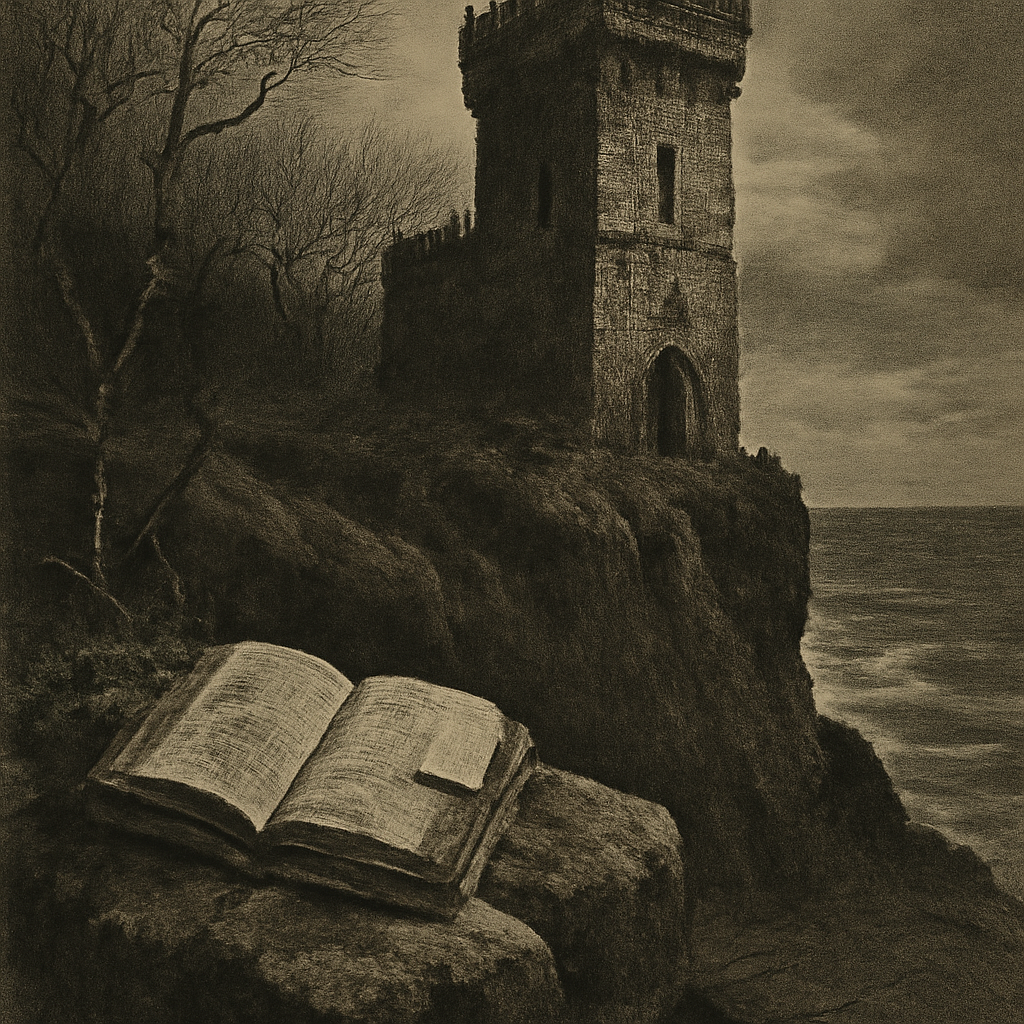
Extract from the Parish Register of Heiligenberg, 12 November 1847
In the bitter onset of a chill November evening, under cold sea winds that swept relentlessly from the Baltic’s endless expanse, there arrived at the vicarage of Heiligenberg an aged figure whose presence would quietly unsettle the village’s fragile peace. Captain Friedrich von Albrecht, retired from the Prussian navy, sought sanctuary and counsel amid the skeletal remains of the once-mighty Teutonic watchtower known as Hohenwacht, perched above the craggy shoreline.
The captain carried with him a singular relic, a worn prayer book, its leather cover fractured and faded by years and salt spray. This volume, he declared with a trembling voice, had been discovered within a concealed hollow of the tower’s ancient parapets during a recent solitary vigil. Yet, upon closer inspection, its mystique deepened: one leaf was absent, torn cleanly from its binding, as if excised to deny some secret truth.
The vicar, Herr Pastor Müller, recorded the captain’s recital that evening by candlelight. The prayer book, bound in dark calfskin and inscribed in painstaking Gothic script, contained devotions used by the Teutonic knights who manned Hohenwacht in days long faded. Each page bore the faint stains of tears, and an odor of brine and decay clung stubbornly to the paper.
Captain von Albrecht recounted his discovery:
- The strange tide upon the night the page vanished: A tempest had roared along the coast, battering the tower with winter’s fury.
- A whispered litany heard between the storm’s howls: The captain spoke of murmured prayers, half-caught upon the wind—words no living tongue could quite claim.
- The missing leaf’s content: Supposedly containing an exorcism once employed to stave off a shadowy pestilence that afflicted guards of Hohenwacht centuries prior.
Pastor Müller’s entry closes with a tone of uneasy reverence, noting the captain’s pallor and his gaze fixed upon the barren page where aged parchment had been cruelly excised. "The air remains thick," the pastor wrote, "as though that missing prayer alone once barred a darkness too profound for mortal ken." That evening, both men felt the sea winds carry a sorrow deeper than mere weather—an echo of torment penned, then torn asunder, in a prayer now lost to the howling desolation.