The Shattered Helmet of L-19
When the storm howls on Titan’s forgotten moon base, every second counts—especially for Mission Controller Harlan Peake.
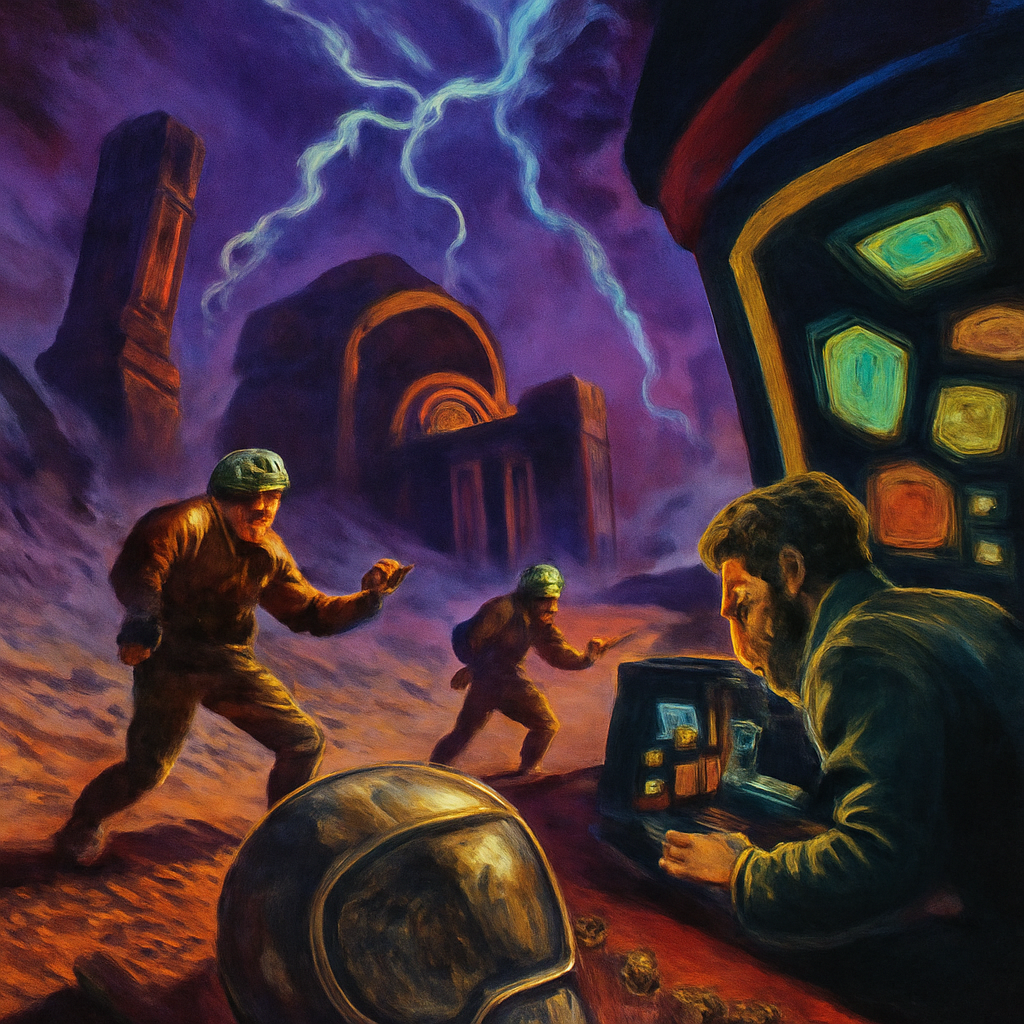
Urgent Dispatch from Forgotten L-19 Outpost, 1961
From the controls of Earth’s most isolated monitoring station, deep on the farthest moon of Saturn’s brooding satellite system, mission controller Harlan Peake’s hands tremble over the blinking consoles. Lightning forks and crackles through the sulphurous, swirling skies outside, illuminating a landscape of twisted metal and eerily silent machinery. The great L-19 base, once a beacon of human hope and the brink of interplanetary conquest, now lies forgotten—abandoned in haste since the crash two weeks prior.
Peake’s voice falters as static-ridden comms buzz urgently: "This is Harlan Peake. If anyone’s listening... the helmet—the helmet is cracked. I repeat, the space helmet from the extravehicular suit, severely cracked. It’s all we found of Commander Voss in Sector 7-B." His fingers hover, almost frozen, before he types a frantic log:
- Time: 03:17 Local Standard Time
- Location: L-19 Satellite Moon Base, Titan Outer Verge
- Subject: Extravehicular Incident, Cracked Helmet Discovery
Outside, the electrical storms rage with unnatural energy, hammering the base like cosmic drummers on an ancient, forgotten tomb. The thunder is no ordinary roar—it bears the eerie cadence of a giant machine awakening. Or perhaps, warnings from the deep…
Earlier that day, a crackling distress signal led Peake to authorise a brief incursion, despite the unstable conditions. Rover teams reported wreckage near the edge of the base’s sprawling dark zone—the place called ‘The Maw’ where previous missions simply vanished. Through the static and the storm, a glint caught by a sensor revealed the unmistakable outline: a space helmet, cracked violently, with tiny inscriptions etched inside its visor.
“Why would Voss approach the Maw alone?” Peake muttered, heart pounding. His nerves, already frayed by solitude and storm-bound isolation, barely held together as his mind spun theories of alien technology or a trap laid by the enigmatic native lifeforms whispered about in classified memos.
Behind him, the blinking radar screeched erratically; the storm’s electrical discharges interfered with instrumentation. Peake’s face tightened with increasing urgency:
- This was no accident.
- The cracked helmet was a message.
- And whatever lurks in The Maw waits…
His fingers slammed the console keys to initiate a remote drone sweep, risking everything to uncover the truth. The circuits hummed—then faltered—then roared to life, but the screen was obscured by brief bursts of phosphorescent lightning.
Suddenly, a scratchy voice burst through:
"Control, this is Scout-One. Base surroundings anomalous. Presence—non-human detected. Recommend immediate evacuation."
Peake froze. The storm had swallowed their connection again by the time he reached for the emergency override.
His breath visible in the chilled air, he whispered into the void, "Voss, you’re not alone out there. We’re coming—hold fast."
The shattered helmet gleamed ominously on the screen, a silent relic of a desperate last stand against the unknown, on a forgotten moon engulfed by cosmic fury.