The Mask of Vardöe
An archaeological note on a fractured porcelain visage from a frostbound Prussian relay station, 1871.
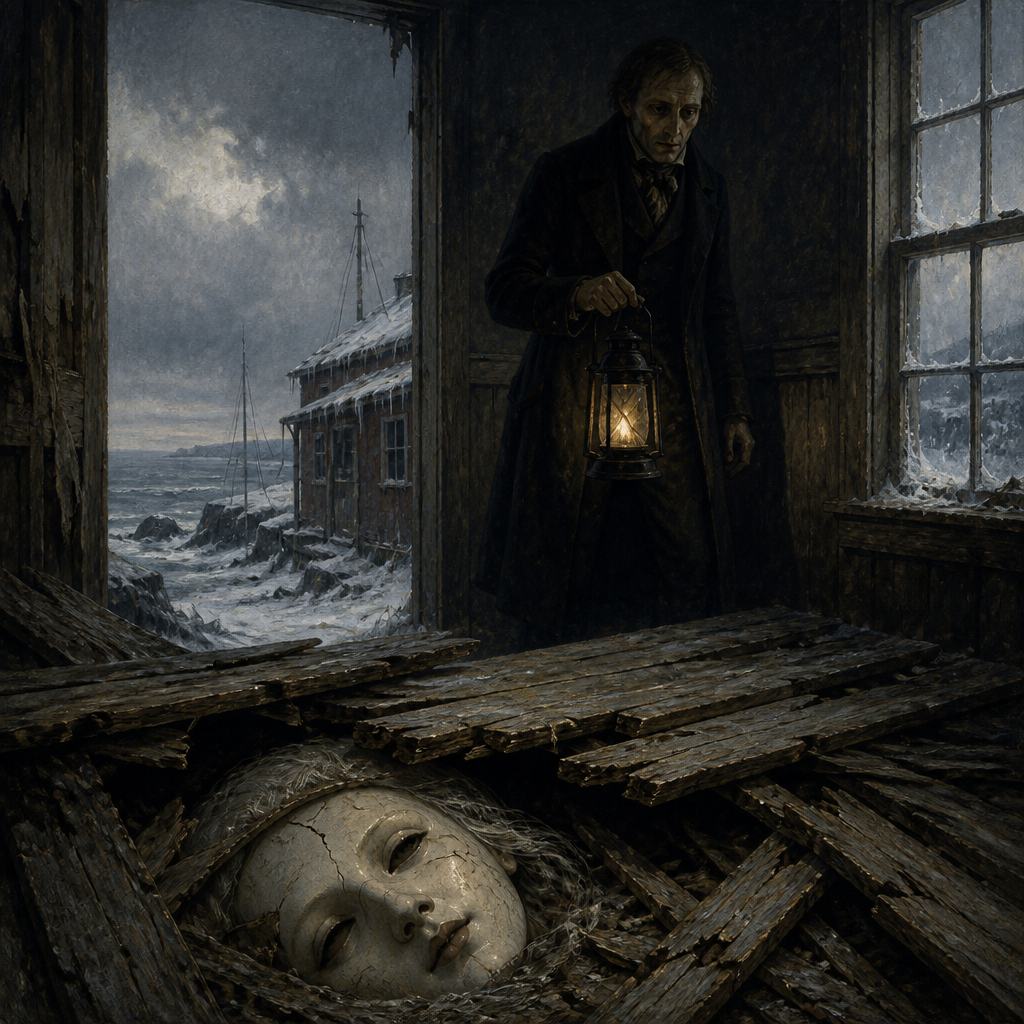
Archival Note, January 1872, Vardöe Post Station
The following account, transcribed from the nervously scrawled journal of the caretaker Herr Albrecht Klein, has been recovered from the ruins of the Vardöe posting station, situated upon the bleak reaches where East Prussia’s frozen hinterlands meet the restless Baltic breath. The year 1871 bore a harsh winter that brought not only unnavigable cold but a portentous dread to this forlorn outpost. Recorded herein is the peculiar discovery and subsequent torment wrought by an enigmatic cracked porcelain mask, unearthed beneath the weather-beaten floorboards of the station’s oldest chamber.
Setting and Context: Vardöe stood isolated; a necessary waystation for weary couriers and naval emissaries braving the capricious northern sea winds. It was here, amid the constant howl of the bitter north and the wash of frozen waves, that Herr Klein, a man of skittish demeanour and worried eyes, fulfilled his reluctant duty. The post’s proximity to the fenlands and its lore-rich isolation made it a nexus for strange tales whispered by transient guests, most of which the caretaker dismissed as superstition—yet unease clung like frost upon the timbers.
Discovery of the Mask: In late November, following a particularly violent gale, Herr Klein spoke of unsettling noises beneath the floorboards—a sound akin to whispered lamentations. Upon forced removal of the warped planks, his trembling hands revealed a porcelain mask, its surface glaringly pale against the sullenness of the frozen earth. The mask was fractured down the centre, its cracks resembling spider veins, as though some unseen pressure sought to divide its visage. Crafted with exquisite delicacy, the mask bore features hauntingly feminine, eyes hollow but suggestive of a watching presence, a faint blush of faded paint across the lips.
Mystical Attributes and Atmosphere: From the day of its discovery, Herr Klein recorded a growing oppression within the station’s walls. The cold sea winds seemed to carry murmurs incomprehensible yet fraught with sorrow or warning. Nights became battlegrounds of restless dreams wherein the mask’s face loomed from shadowed corners, weeping spectral tears of ice. Herr Klein’s entries grow increasingly erratic, hinting that the mask held an unquiet spirit, perhaps one torn from the sorrow of lives lost to the storm-swept waves or ancient curses binding it to the land’s forbidding grasp.
Interpretations and Theories: Several conjectures envelop the mask’s origins. Some speculate it is a relic of forgotten courtly masquerades, displaced by time and tragedy. Others, more steeped in old Prussian superstitions, declare it to be a vessel of a drowned maiden’s soul, condemned to haunt thawing thresholds between worlds. The mask’s fractured state may signify the fracture between the mortal coil and spectral realm, a liminal key of sorts that invites restless powers into the waking world.
Final Notes: Herr Klein vanished from the Vardöe station come the thaw. His last scrawled words caution against touching the mask or disturbing the fragile barrier it maintains against the desolation beyond. The posting station, abandoned and buried beneath snowdrifts, serves now as a somber relic—a silent witness to the oppressiveness of unseen forces that thrive beneath the frozen Baltic skies.
Thus remains the cracked porcelain mask of Vardöe, a frozen visage of grief and mystery, the embodiment of winter’s cruel vigilance and the spectral hauntings it beckons.