The Brass Key of Wladyslaw Halt
An archaeological note on a spectral relic unearthed in East Prussia, 1912
Introduction
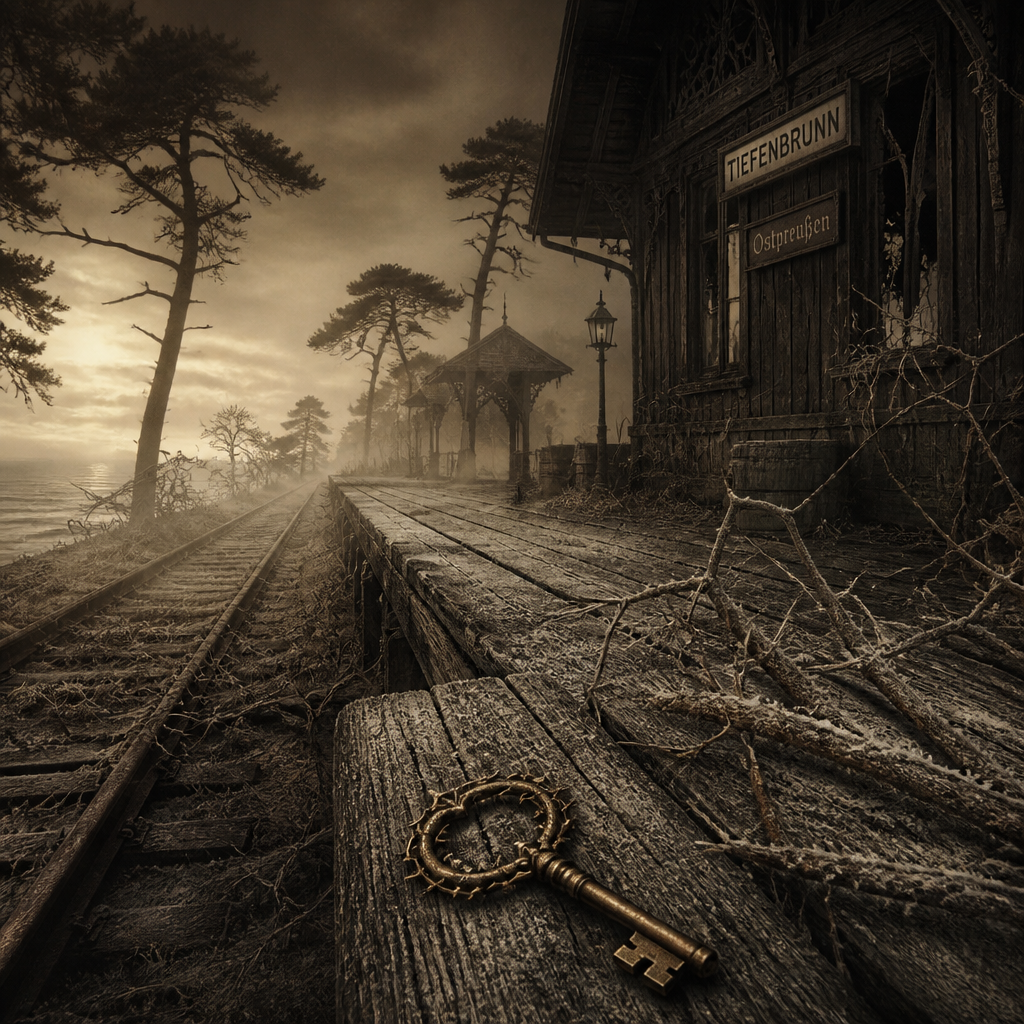
In the waning days of autumn, beneath the pallid light of a reluctant sun, I, Friedrich Albrecht, engineer of Königsberg, undertook a brief sojourn to the forgotten railway halt of Wladyslaw, nestled at the frayed edge of East Prussia’s coastal haunt. This waystation, once a modest node among iron veins threading the Baltic expanse, now stands abandoned and swallowed by bramble and mist, its decrepit platform a silent witness to the march of desuetude.
My visit, ostensibly motivated by a survey of derelict rail materials, yielded a discovery both tangible and ineffable: a brass key of curious craftsmanship, found beneath the crumbling sleeper stones, half-enshrouded by salt-stained rime and the detritus of untold seasons.
Context and Setting
Wladyslaw halt lies, or once lay, a scant three miles from the ragged Baltic cliffs where cold sea winds shriek with ghostly fervour through the skeletal pines and salt-crusted ruins. The year is 1912. The region’s railways, remnants of a bygone industrial optimism, have begun to lose their purpose under the compass of progress and political tides. Few remain to recall the halt’s modest role; fewer still its time of flourishing.
The halt was known among local lore as a place where travellers often felt the uncanny, a transience not solely bound to the rhythms of steam and steel, but to something older, spectral.
The Brass Key
- Description: The key is wrought of solid brass, tarnished and worn, its bow fashioned as a crown of intertwined thorns and tendrils, suggestive of both arboreal and ecclesiastical symbolism. The shaft is long and slender, the wards complex and asymmetrical, defying simple lock mechanisms known to contemporary engineering.
- Discovery: Unearthed beneath the decomposed wooden platform sleepers, as if deliberately concealed or lost to time, it lay alongside fragments of oxidised iron nails and shattered glass.
- Inscription: A faint engraving, partly effaced, reads in Old Prussian dialect the word "Wisai", whose meaning remains elusive, though conjectured to refer to "watch" or "ward".
Reflections and Hypotheses
The key’s presence at a desolate railway halt is an enigma; it neither fits the utilitarian demands of railway engineering nor the domestic conveniences of adjacent dwellings known in period maps. Some townsfolk, versed in the spectral myths of the coast, whispered of an "Old Keeper"—a guardian spirit or wraith said to attend the halt on storm-tossed nights, unlocking gates unseen by mortal eyes to realms beyond the mundane.
On a personal note, the inexorable chill of the Baltic winds seemed to carry faint echoes of melancholic whistles, the distant lament of lost trains, and—strangely—the faint clinking of this very key upon invisible chains. Whether this be the plaint of memory or the conjuring of a weary mind parted too long from the hearth, I cannot declare with certainty.
Conclusion
Though an engineer by trade and a man of earthly measures, I am compelled to record this brass key as a tangible relic of an unseen past, a fragment of that liminal space where the mechanical world yields reluctantly to the interminable shadows of folklore and longing. The halt of Wladyslaw and its mysterious key stand as one amongst many veiled thresholds, whispering of histories half-remembered on cold Baltic nights.
May this note preserve, in its modest words and measured observations, some trace of the spectral realm that haunts the ruins of human endeavour.
Friedrich Albrecht, Königsberg, November 1912