Platform 7: Flooded and Forgotten
A cracked retinal scanner and a transit police analyst's log from 2038
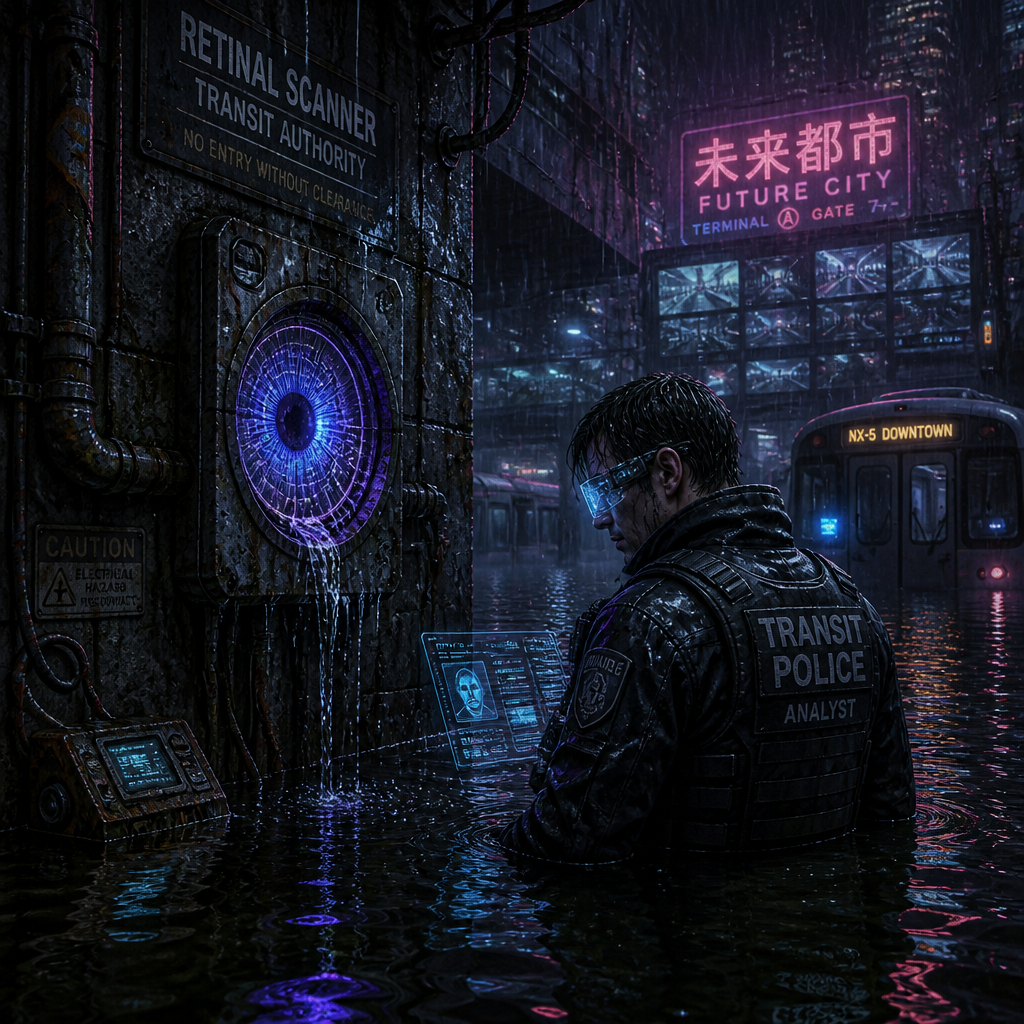
Maintenance Ticket #34729-03A
Date: 12 Oct 2038
Location: Neo-Kensington Metro - Platform 7 Flood Zone
Weather: Humid electrical haze, persistent drizzle
Reported by: Analyst Roland M. Voss, Transit Police Surveillance Division
Platform 7 on the Neo-Kensington line remains submerged beneath a stagnant slosh of brackish water, the remnants of last month's infra-system flood long since mixed with oil slicks and faded neon reflections. Above, half-lit ads flicker erratically on cracked holoboards, while the infrastructure around the platform moans quietly under the weight of corrosion and abandonment. This ticket logs a repair attempt on the retinal scanner unit embedded within the south wall access panel, last operational in 2029, yet still intermittently pinging surveillance servers with garbled data.
The retinal scanner, an obsolete Arasaka VX-8 Mk.II model, sits cracked, one eye-shaped sensor lens spiderwebbed like fractured glass. Attempts at recalibration register continuous error codes—4017, 5G snarl, memory corruption—likely exacerbated by the tropical humidity and electrical haze pervading this underground cavity. The scanner's purpose? To authenticate authorised personnel entering restricted control chambers beneath the platform, now long-defunct, corporate secrets buried beneath layers of encrypted decay.
According to transit police logs, from this vantage point, transit analysts like myself have witnessed the daily parade of data ghosts—shimmering, fragmented echoes of commuters, etched into the city’s surveillance grid but fading fast as back-end corporate servers shut down or scramble archived data. Records of Platform 7’s true usage after 2030 remain notoriously unreliable, conflicting between Greater Neo-Kensington Transit Corp (GNTC) reports and BlackNet leak references.
Roland Voss, assigned here since '34, observes a melancholy routine: the scanning apparatus faults recording corrupted retinas of ex-workers whose entries never registered properly during the metro-wide shutdown. Data anomalies hint at a corporate cover-up—perhaps the scanner’s true malfunction was to selectively omit entries logging certain personnel. With the scanner’s glass fractured and the platform flooded up to waist depth, the only witnesses left are dim blue phosphor reflections on the water’s surface, dancing under neon advertisements for synthetic moods and neural adjustments that can't reach this forgotten station.
On this humid night, with the electrical hum crackling lazily through damp cables overhead, the scanner's intermittent flickers seem almost a heartbeat—pulsing between memories and oblivion. Despite attempts to restore functions, no maintenance bots have been dispatched since the lockdown protocols enacted by GNTC seven years prior; the unit remains an eerie sentinel of corporate secrecy, waiting for a touch that will never come.
In closing, this maintenance ticket serves less as a request to repair than a quiet archivist’s lament—a record of how concrete, neon, and data fragment when neglected, how technology mourns alongside the city’s lost souls. The flooded platform persists, a threshold submerged in time and silence.
- Unit status: non-functional, intermittent scan glitches
- Damage: cracked sensor glass, water-corrosion on circuit banks
- Environmental conditions: persistent humidity, electrical haze, metro flooding @ 1.2 meters
- Operational history: last verified use in 2029, erratic data pings since 2035
- Suggested action: record archival, no active repairs authorised due to corporate lockdown
Filed by: Roland M. Voss, Transit Police Surveillance Analyst
End of ticket