The Bell Beneath the Inn
A Melancholy Resonance from the Flooded Cellar of Gasthaus zum Stürmischen Meer, 1871
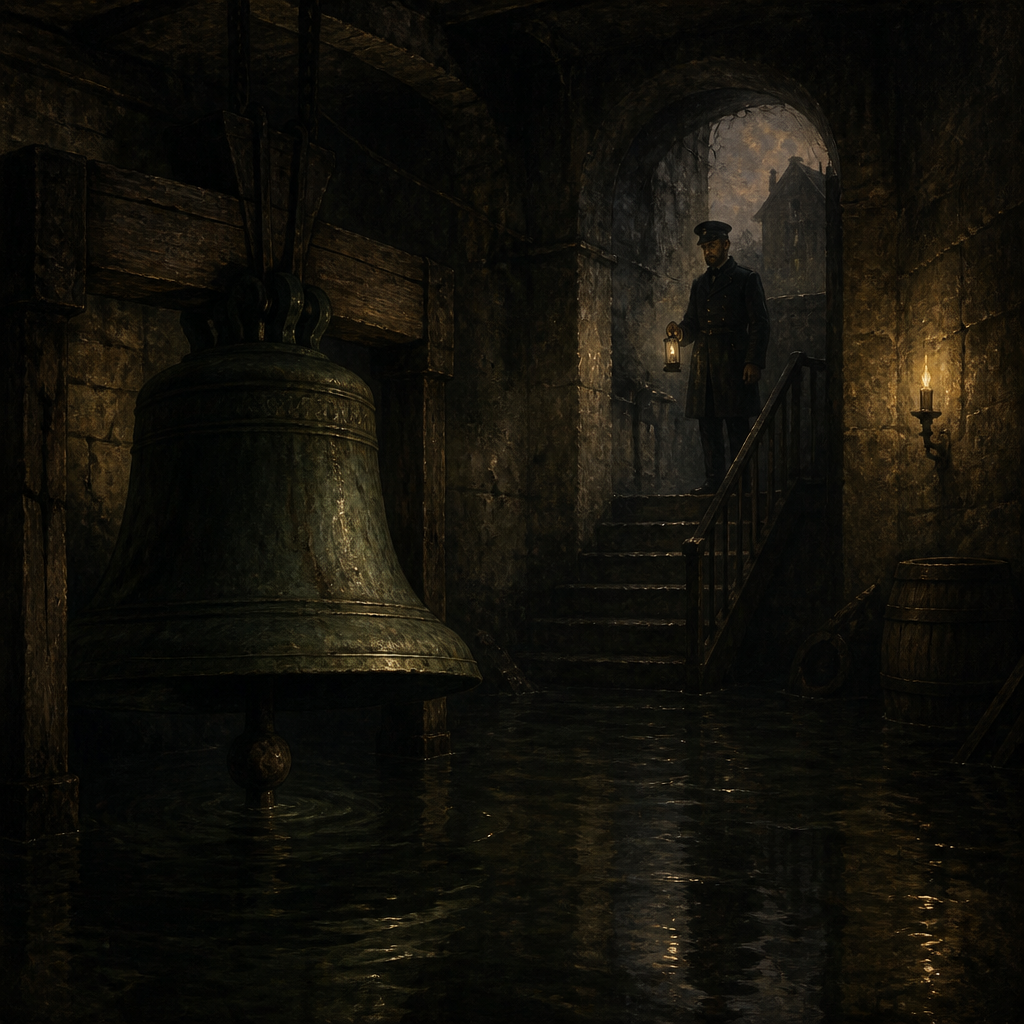
Archaeological Note on the Subterranean Bell of Gasthaus zum Stürmischen Meer
In the late autumn of the year 1871, during an uncommonly still day bereft of even the faintest sigh of wind, a curious investigation unfolded beneath an aged inn on the eastern fringes of East Prussia, near the faded township of Memel. This establishment, the Gasthaus zum Stürmischen Meer, a locus of weather-worn stone and half-decayed timbers, was known to locals for more than its modest fare and sour beer: an ancient cellar, long submerged beneath the rising waters of forgotten floods, concealed a solitary bell whose chime defied earthly explanation.
On the occasion in question, Herr Friedrich Lenz, a railway inspector recently assigned to the nearby Königsberg line, had made his mannered acquaintance with the inn. A man of exacting habits and a mind attuned to the machinery of progress, Lenz had been drawn nonetheless by a tale recounted over amber draughts—of a bell that tolled with no discernible hand to strike it, its sound haunting the inn's vaulted undercroft.
Moved by a restless blend of scepticism and intrigue, Lenz persuaded the innkeeper to allow a descent into the cellar, where, beneath knee-deep waters dark as raven's wing, the bell lay eclipsed by muck and memory. The air in the basement was dense, laden with the scent of brine and deep earth, undisturbed by breeze or whisper—an atmosphere close to the very silence of the grave.
It was here that the supernatural first asserted itself. Through the murk, Lenz discerned a bronze bell, its surface mottled with verdigris and encrusted sediment; the clapper, strangely, suspended but not resting against its interior. Moments after the inspection began, an eerie resonance began to emanate—not from the wind, nor from any living hand, but as if the bell communed with the very stones around it.
This bell, the sole artifact salvaged by the decades of inundation, is thought by local tradition to be the soul of a drowned sailor, whose final act before the relentless flood was to toll for warning, even as the waters claimed land and life. It is said that on still days, like the one when Herr Lenz made his solemn appraisal, the bell rings—its melancholy note weaving a lament for lost hopes and forsaken passage.
In the intervening years, subsequent attempts to retrieve or silence the bell have met with inexplicable failure; the waters rise with sudden, inexplicable increase, or the timbers creak as though in protest. Herr Lenz himself, known for his rigorous reports and unshaken demeanor, confided in later correspondence a lingering unease, as if the tolling was a message meant for this world’s ear but not for human comprehension.
Within the broader context of East Prussian lore, the bell is a rare testament to the intersection of tangible history and the ghostly, a submerged relic echoing with the voices of the drowned and the forgotten. It stands as a solemn witness to the caprices of nature, the dread of death, and the strange persistence of memory beneath quiet waters.
Summary of Observations by Herr Friedrich Lenz
- Location: Flooded cellar beneath Gasthaus zum Stürmischen Meer, East Prussia.
- Date: 15 November, 1871; noted for an air still and absolutely barren of wind.
- Object: Bronze bell, encrusted with verdigris and sediment, suspended clapper.
- Phenomenon: Bell tolls without human agency; tone melancholy, invoking the memory of drowned souls.
- Atmosphere: Heavy, salt-tinged air, silence profound except for resonant chiming.
- Local Lore: Bell believed to be the lament of a drowned sailor, tolling warnings from the depths.
The corrosive passage of time obscures many things, yet certain sounds transgress all boundaries—the bell beneath the inn tolls still, defiant and dolorous, in a world where the living seldom seek to listen.